
Interiority 2

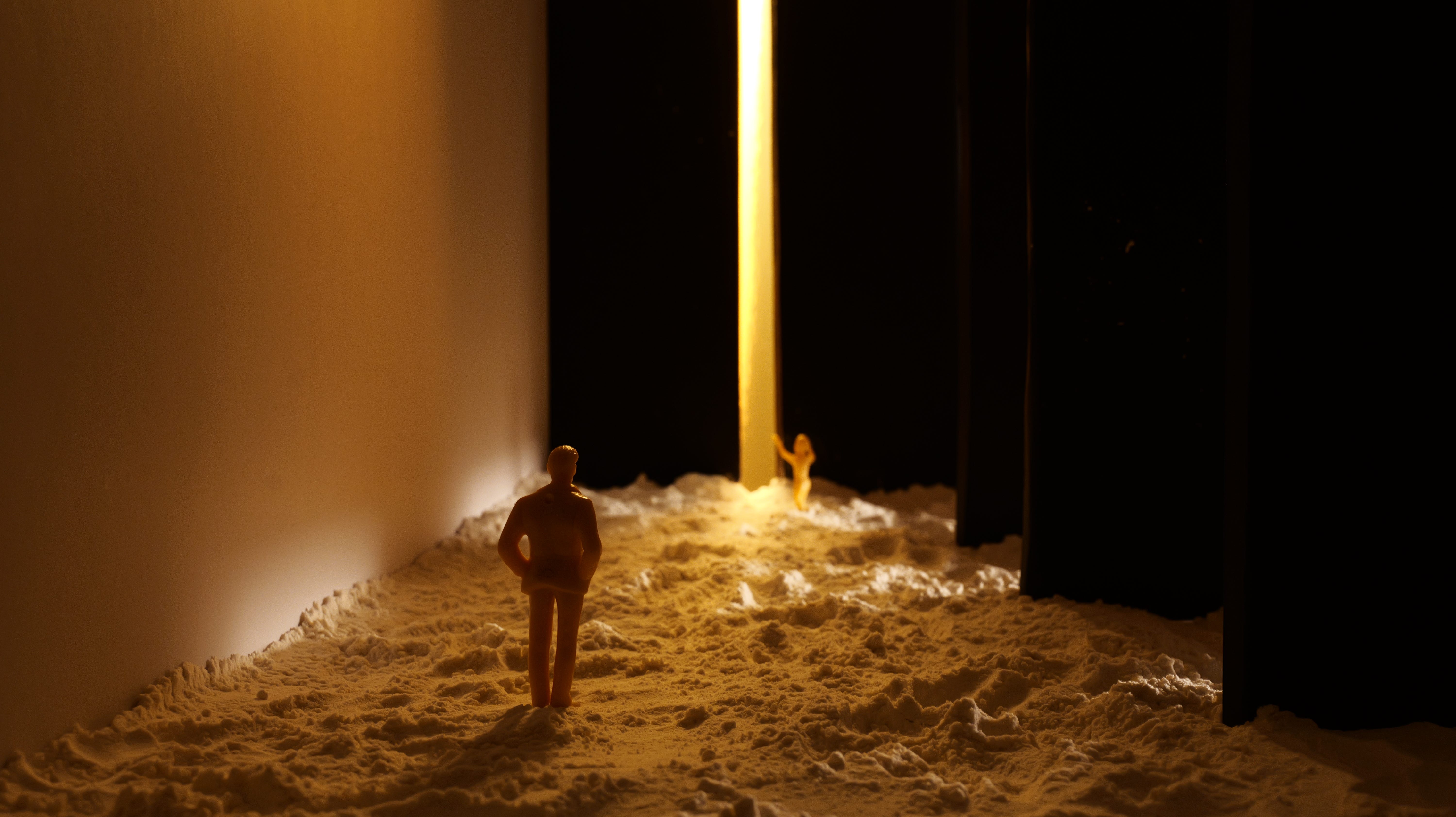
This is a re-upload of a post from my old blog, originally posted on March 8, 2025.
What’s new
Okay: two developments.
First, I won that eBay bid and got the 20-60mm Lumix zoom lens. Amazing.
Second, I ordered these little 1:25 scale miniature people, to use in the models for this project.
Movies
So, this past week, I watched Stalker (1979) for the first time.
Wow.
Anyway, when I was embarking on the next photo for this project I didn’t set out to do something Stalker-inspired, it just sort of happened.
Here’s one of the coolest shots in a movie filled with very cool shots:
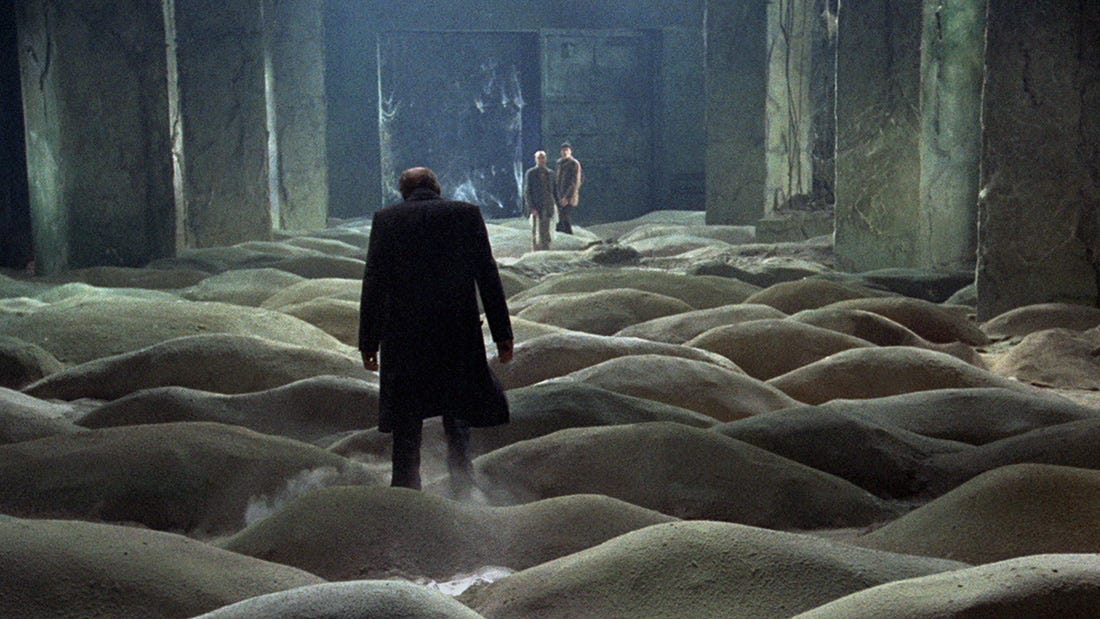
I obviously don’t have the talent or the resources to recreate that shot, nor was I trying to recreate that shot (what a foolishly ambitious thing that would be to do). But I did want to use it as the seed for experimentation.
Experimentation
First, I made a new box. I’m limited in the amount of detail I can put into these little bits of architecture (unless I want to learn how to do scenic art, which, you know, maybe?), so we’re basically dealing with foam board, black paper, and a golden reflective sheet that I put behind everything, and which is responsible for the color of the light.
Oh and also many handfuls of all-purpose flour.
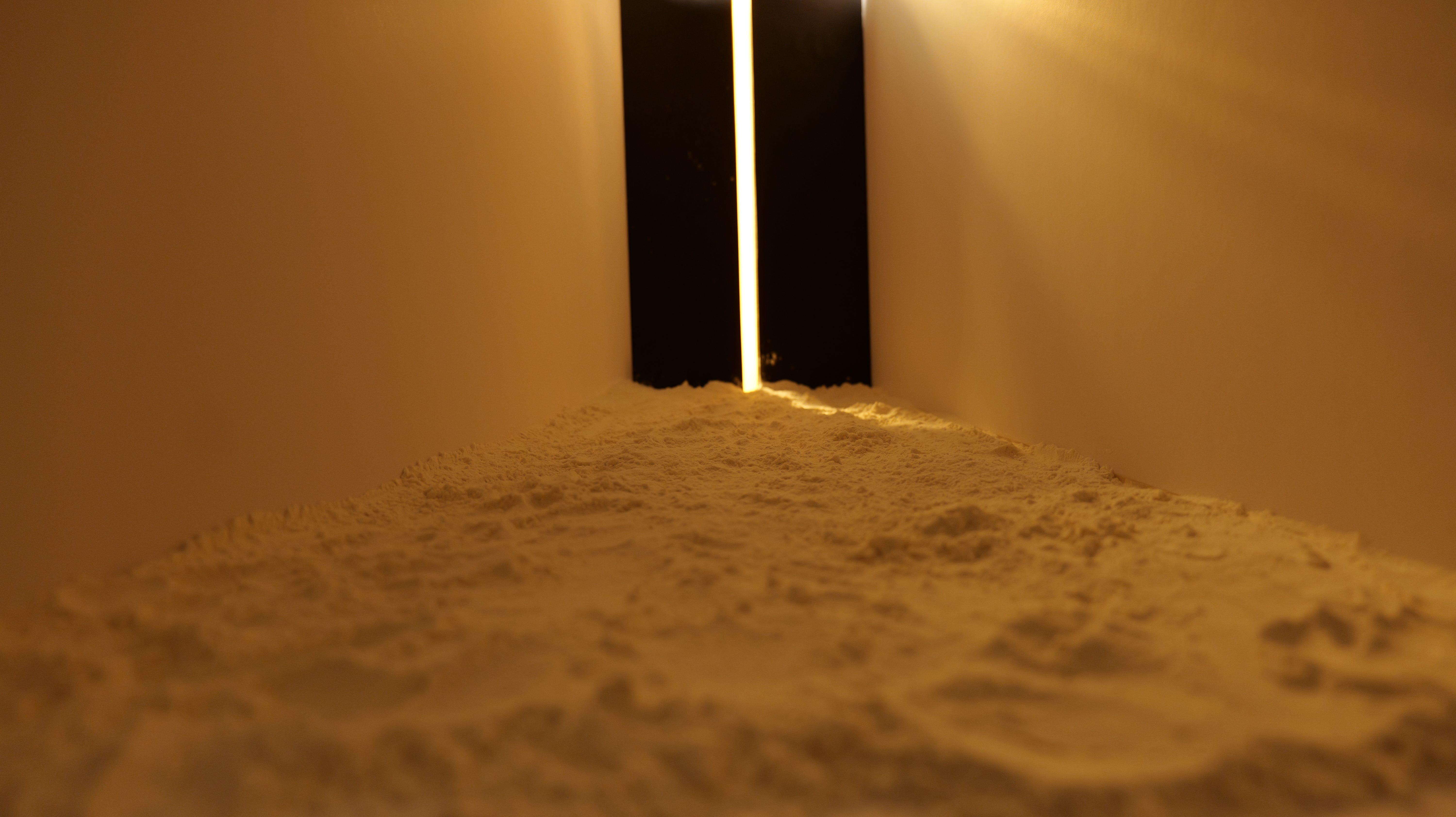
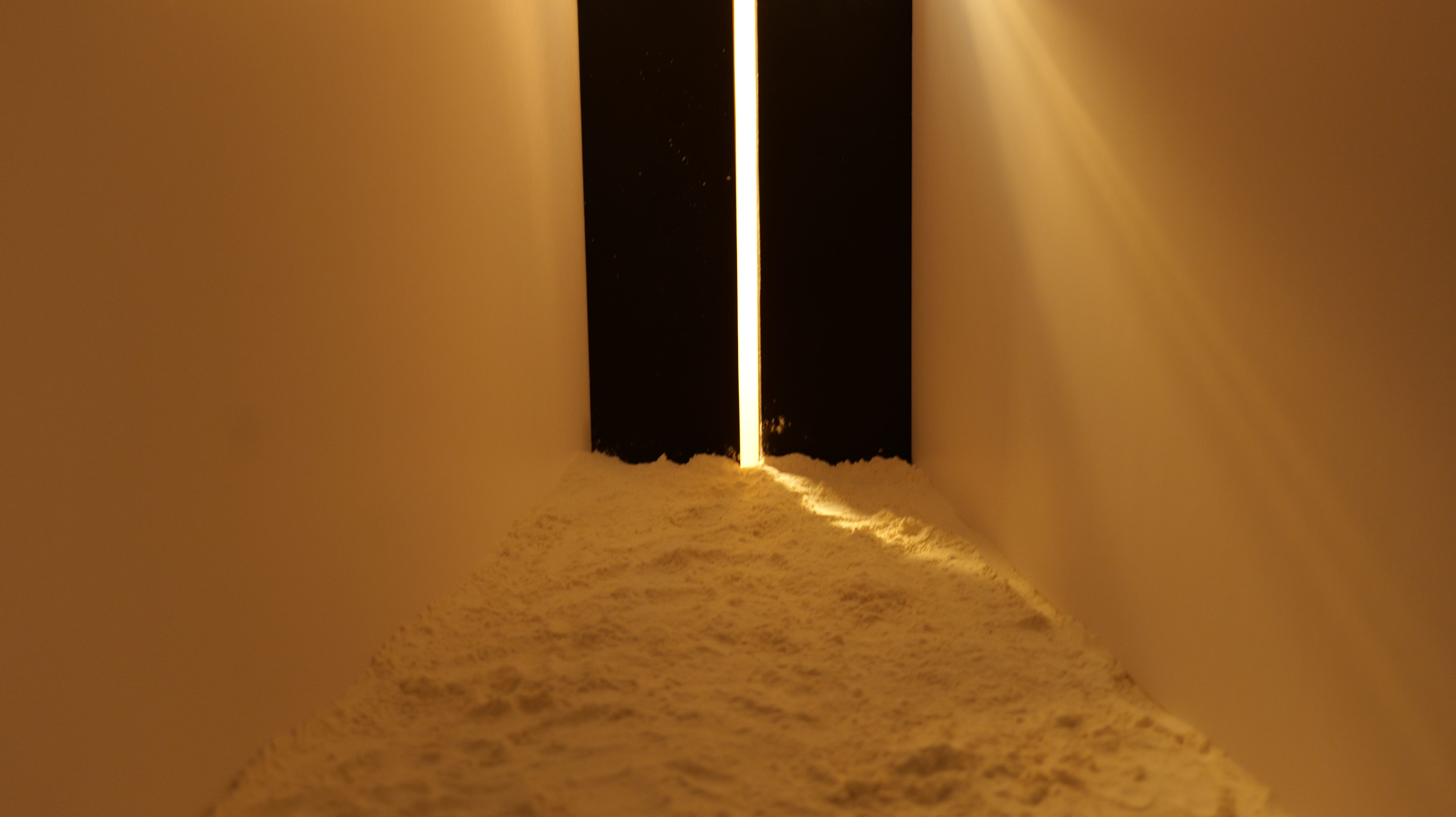
Here are two pictures at two different focal lengths, the widest (20mm) and mid-range (40mm):
Two things:
The first is the major one, which is that the lighting in this scene looks very flat and washed out. That’s because there’s only one source of light (the desk lamp that’s being reflected off of the golden sheet - most of the light is coming through that tall slit in the back). The lighting is uniform and kind of boring.
The second is that there’s some dust on my camera sensor (you can see a blotch in the middle of the left white wall, close to the ground). I noticed this pretty late in the night and I also don’t yet have a kit to clean my sensor properly, so that’s gonna be somewhat common in these pics.
How to make the lighting less boring?
I need another light source involved, doing something interesting.
I looked back at that still from Stalker and noticed the shadows on those sand dunes (or whatever they are). There’s a bright ridge at the top of each dune, and a shadow on the side facing the camera. That tells me that a light is coming in from the back, at a fairly low angle, low enough to not light the camera-facing side of each dune.
So I decided to incorporate one more light source, coming in low from the right side of the box. I made some new openings in the wall:
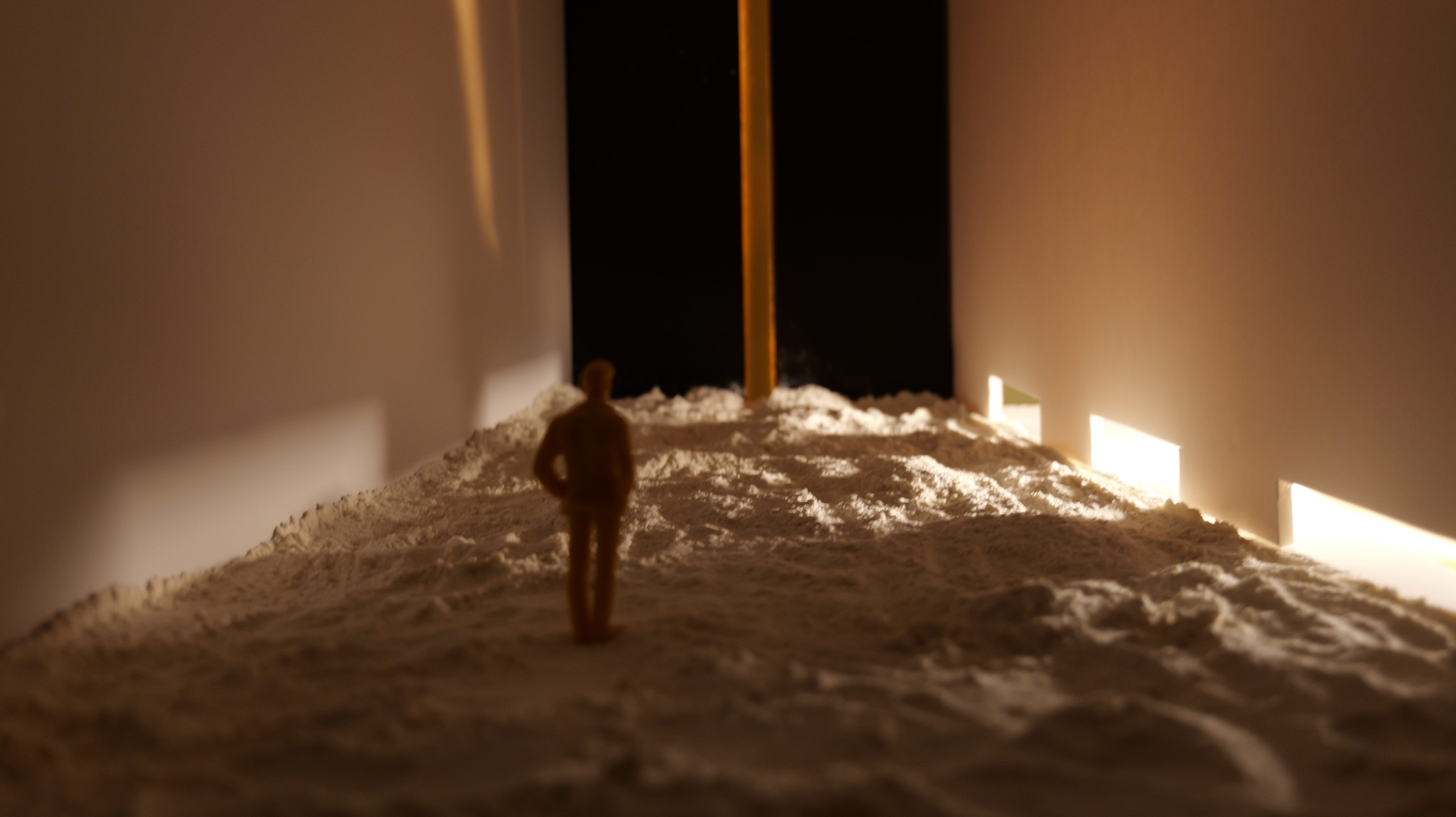
I forget at what point in the night I majorly bumped up the contrast in the main camera settings, but it might have been around here because the quality of the shadows looks much different in this pic (though that may have just been the lighting).
Next, I added some vertical walls to hide those openings. They kind of act like the curtains that line the wing of a stage. Once again, this was directly inspired by that Stalker pic.
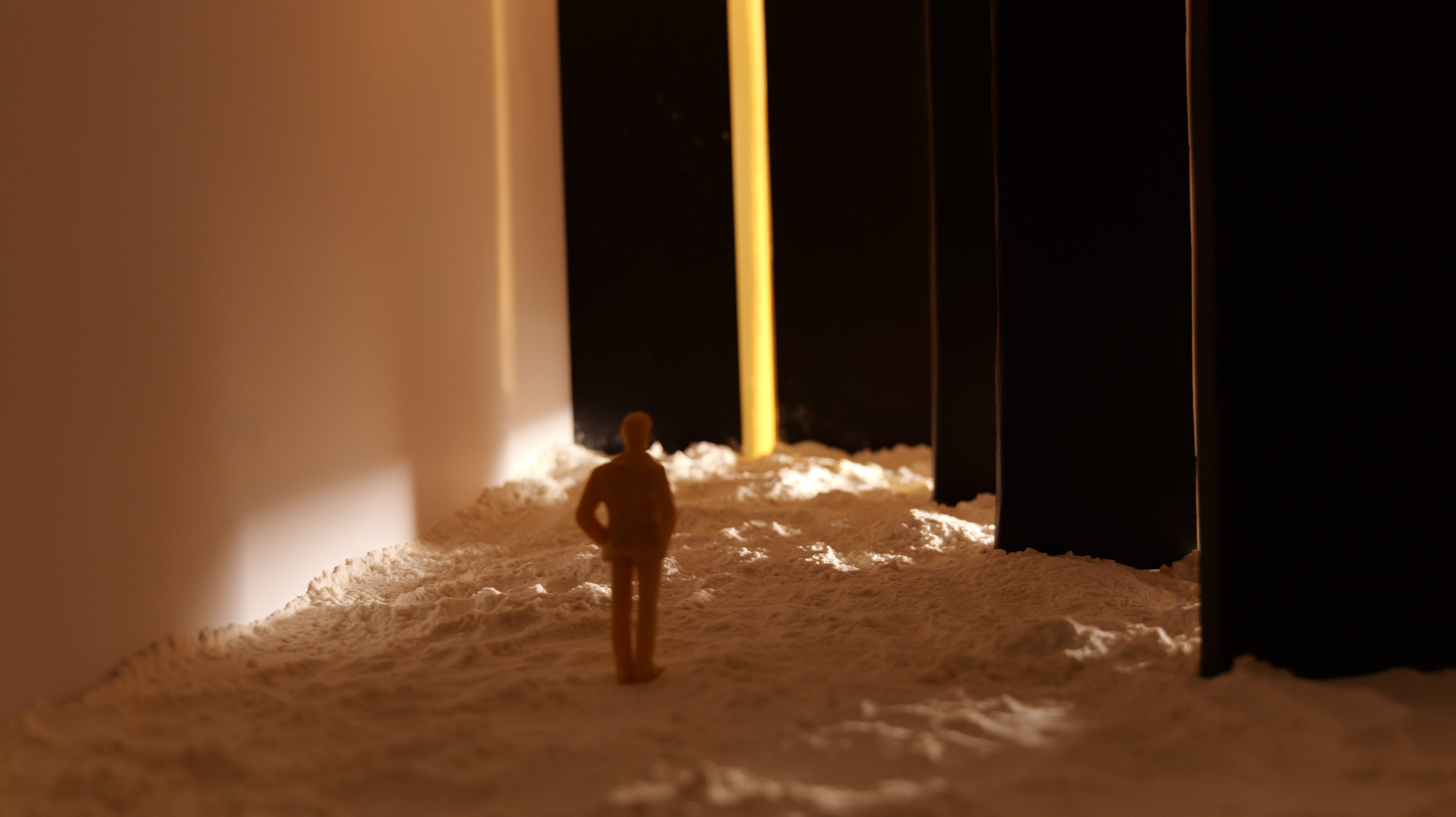
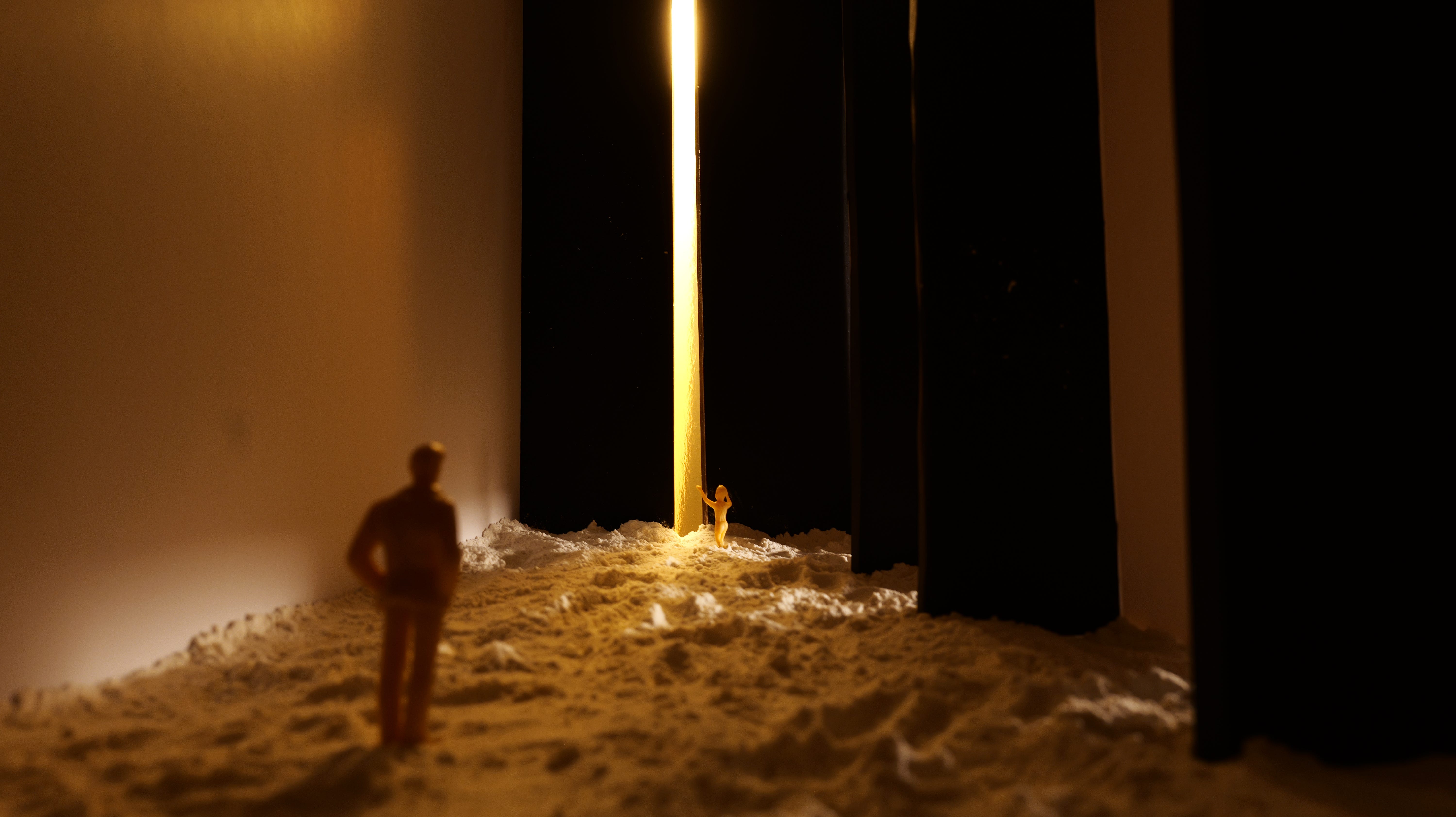
Finally, I added another miniature figure in the back of the scene, which I think makes the image feel like it’s telling a story.
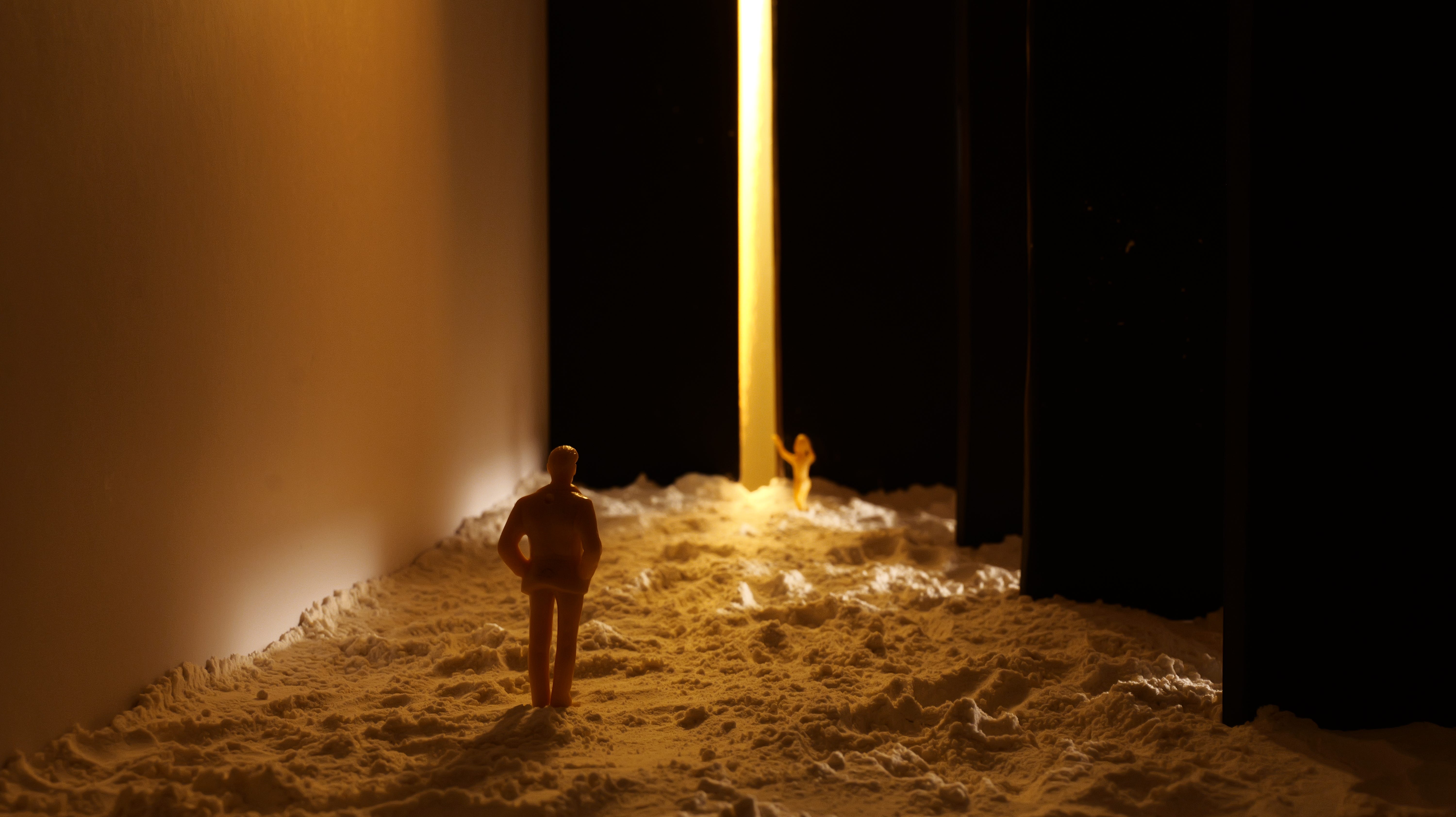
This is the photo that I began the post with, because it’s possibly my favorite (though it has problems). What I think makes it better than the other photos I took is the quality of the light on the ground, the specific mix of gold and dark. It’s slightly under-exposed, relative to most of the other photos, but in a way that I like. Also, I like how sharply the man is in focus. A bunch of the other photos that I liked have focus problems (as in: neither figure is in focus).
The main problem with this photo (besides a small speck of dust on the sensor) is the focal length. In reviewing these photos, I decided that there was a sweet spot in the 35-40mm range, where I really liked the amount of depth. This photo is made too shallow by the longer zoom (49mm).
Once I added the boy, the scene was set, and I stopped modifying it.
At this point, this is what my setup looked like:
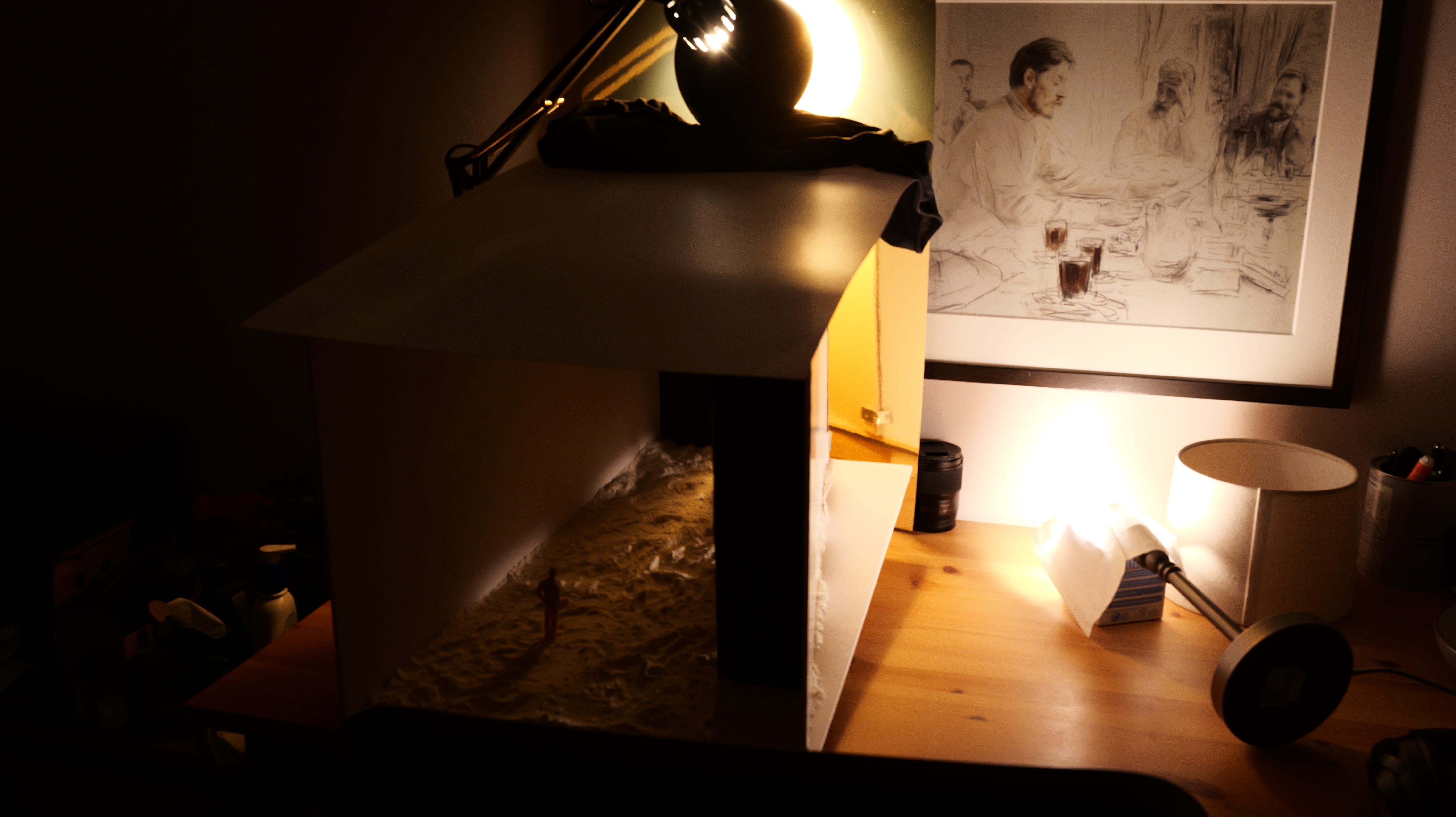
(Observe the chiaroscuro lotion bottle to the left of the box.)
Once I’d stopped messing with the scene itself, there were basically five variables that I was playing with:
Focal length (between 20-60mm)
The distance of the camera from the subjects
The height of the camera off the ground
The angle of the camera (up/down) from parallel
Depth of field
All other decisions were just about making sure the shot was properly exposed.
Here are a few of my other favorite photos of the night. I think they’re all good in different ways:
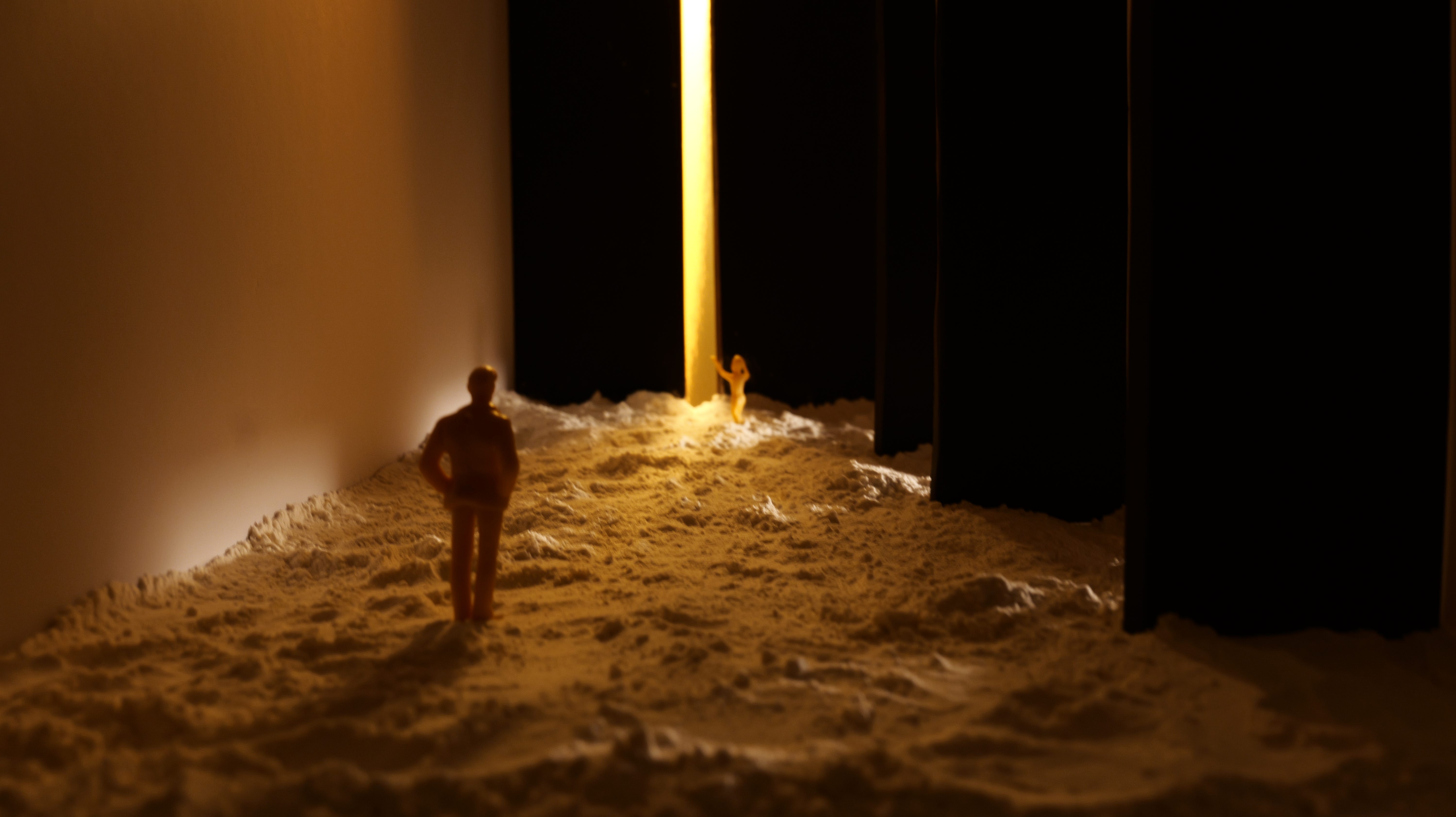
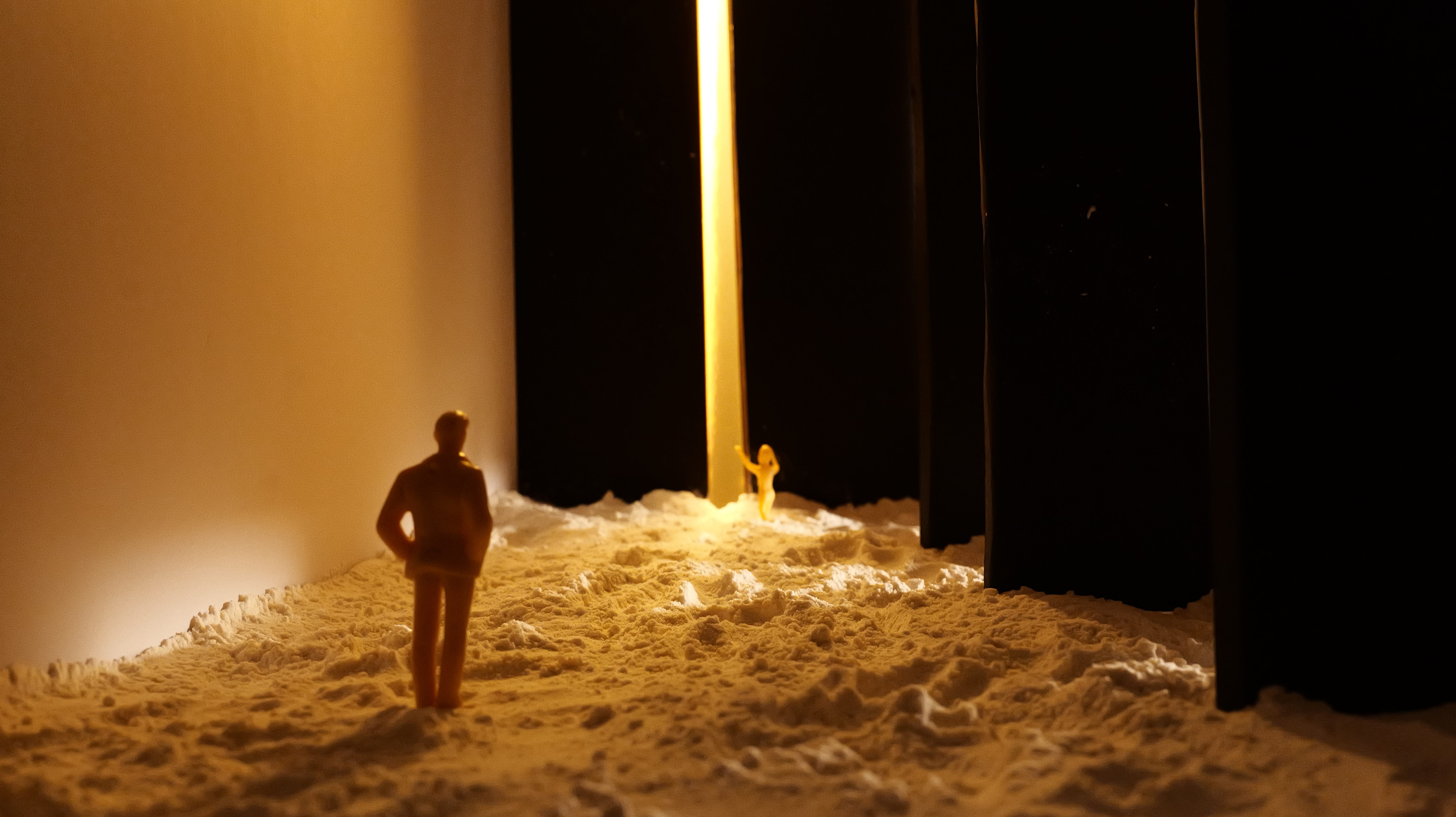
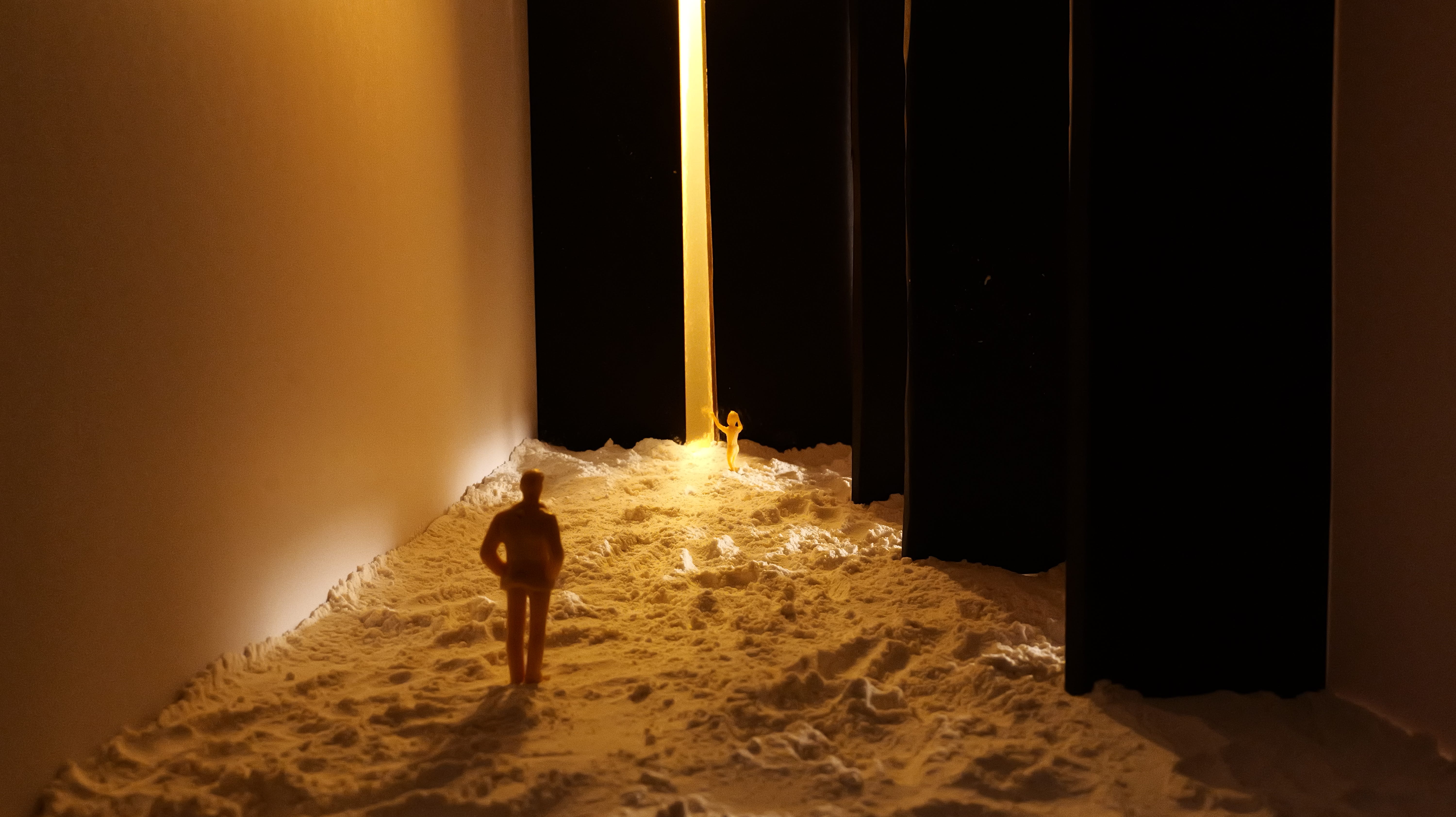
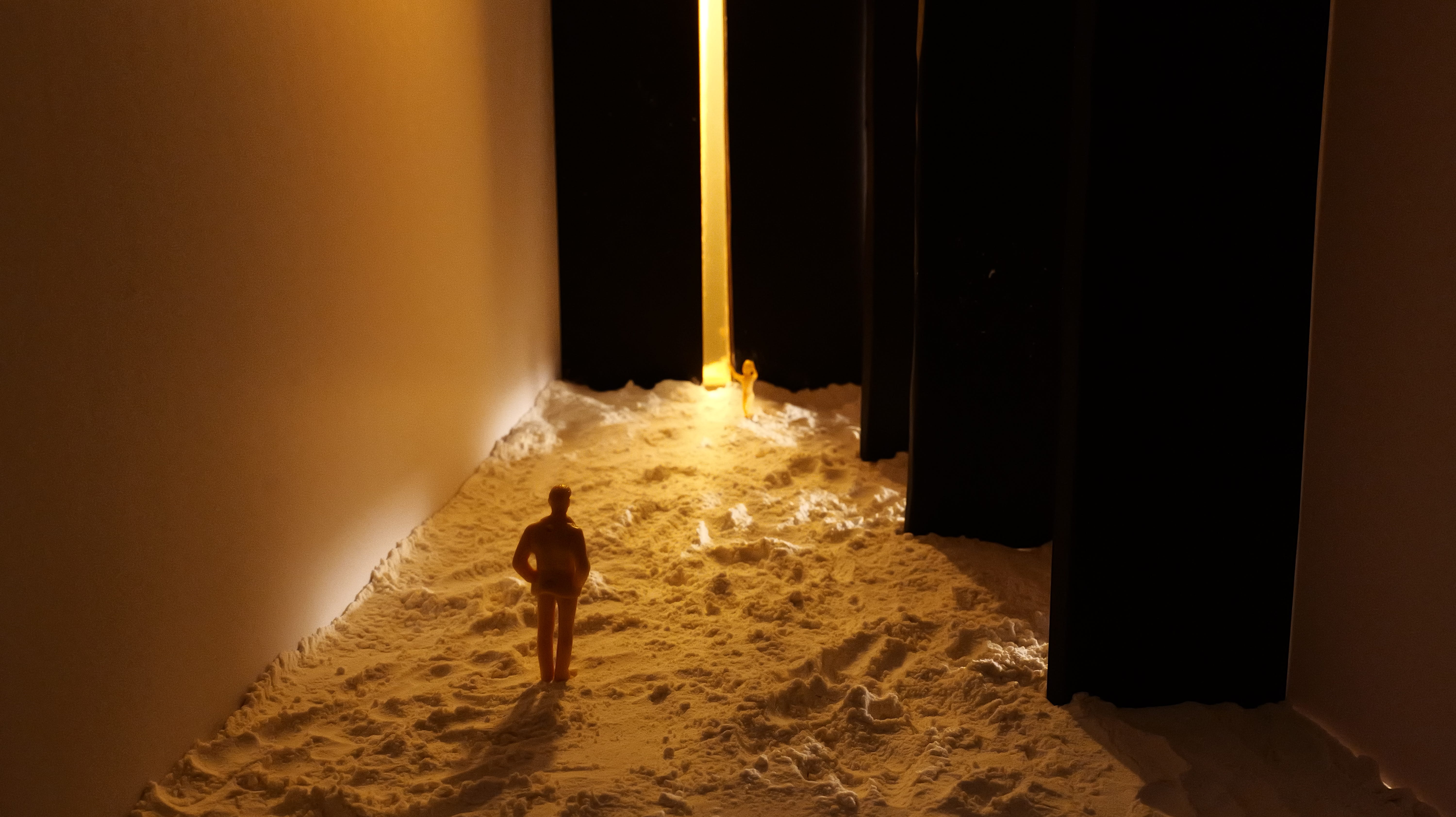
The two at the end are both a bit wider than the others, and a bit more distant, which I think adds an interesting formalism to the image. Almost like an opera set, or something.
Note also that I took many, many bad photos. I used the full range of the lens and ended up just naturally liking the photos in the middle of the lens’s range (35-40ish mm). Here’s an example of a photo with a wider angle (28mm):
I don’t think that I like what the width does to the geometry of the room. Although two things that I do like about this photo are a) the way that the golden light kind of glows at the top of the picture, and b) the immense height of that back wall.
Takeaways
The main thing that I found interesting in this experiment was related to focal length. It’s odd, the way that the focal length affects a photo’s vibe in a way that I find very difficult to articulate. I even find it difficult to know what focal length I prefer, sometimes.
I think I just have to continue experimenting. This will help me get more of an intuition for what focal length I want in a particular context.
The other things I noted were:
I need more lights. I only have two.
I need a kit to clean my sensor.
A flat, textureless wall of a single color will only ever be so interesting.
On that last point, it’s important to keep in mind that the floor (covered in flour) is consistently the most interesting thing to look at in the image. If it had just been a solid white piece of foam board, these pictures would have been way less interesting.
Finding ways of incorporating texture and color variance to surfaces will become important, but I don’t yet have the courage to learn scenic painting/art (but maybe this project will inspire me to take the plunge).
What if you got a tiny smoke machine