
Interiority 1

This is a re-upload of a post from my old blog, originally posted on February 28, 2025.
I want to make something dreamy.
I’ve become really interested in the way that architecture and light interact with one another, specifically in the context of film.
A lot of the films that I’ve been taking inspiration from recently lean into a certain expressionism, and much of that comes from the creative, often theatrical use of architecture and light. The effect is often dreamy, heightened, highly dramatic.
Take this shot from The Night of the Hunter (1955):
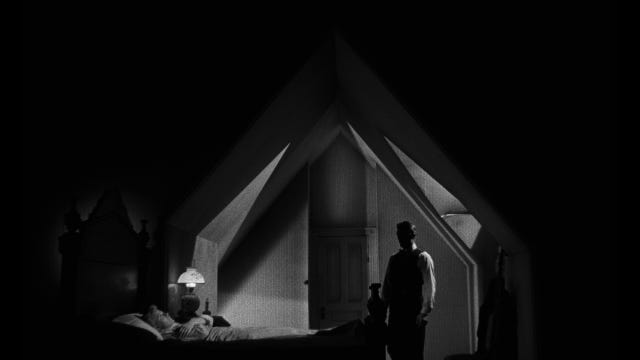
It’s amazing. The contrast between light and dark, the gothic sense of this domestic architecture, the fact that his front is entirely in shadow, the sense that this whole scene is taking place in a sort of black void... it all produces a melodramatic and slightly surreal effect that I find stunning.
This whole post was inspired by my having made a connection between two scenes from two stories in two entirely different media. The first is that shot from The Night of the Hunter. The second is this scene from the 2019 video game Disco Elysium:
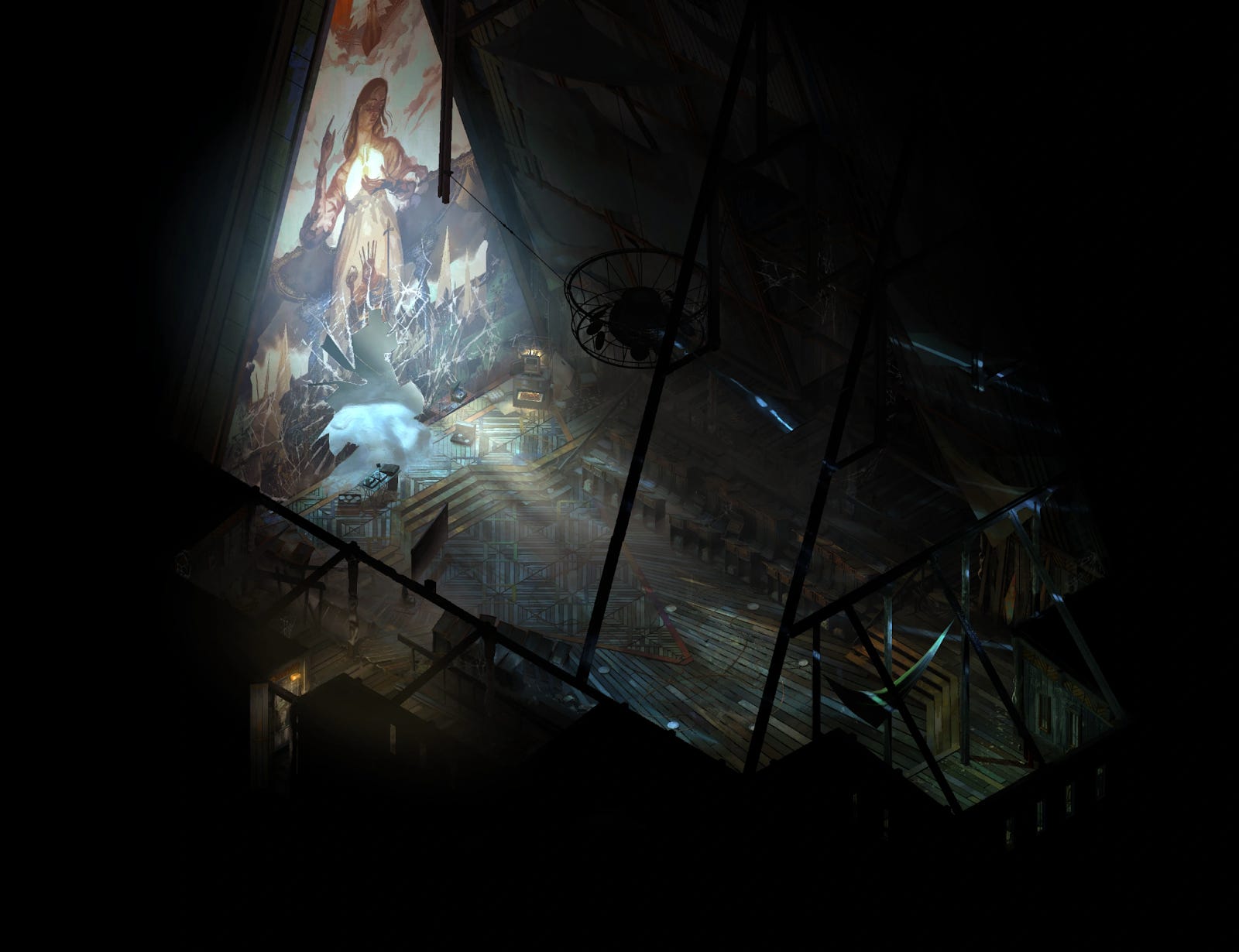
The way that the scene is lit almost entirely through that big window, the way the whole room is surrounded by a creeping pitch blackness, those beams in the foreground that communicate an architecture that isn’t actually there... I love it.
I love how in both scenes, there are whole walls which are basically “unexplained.” As in: where is the back wall to the right of that window in the Disco Elysium church? We kind of see it, but barely. Where are the walls in the foreground of that Night of the Hunter bedroom? *shrug*
These walls are kind of there, by implication. And they’re kind of not there at all.
I love this stuff.
Anyway, having made the connection between these two scenes, I realized that I really wanted to understand how architecture and light work together in film. I especially want to learn how these things work to create a specific mood.
First, I thought to myself: “Man, I wish I had a huge studio space where I had access to all of the lighting and set pieces and actors that I wanted.” But that’s never gonna happen. Then I thought, “Hey maybe you could do all of this in AutoCAD or Vectorworks or something and make some nifty renderings,” but honestly that sounds like a pain in the ass.
Then I realized I could just do this in miniature. If I want to understand lighting, I should just build a little scene and mess around with lighting it.
So that’s what I’m doing. I’m calling this project Interiority, because I’m mainly interested in lighting interior spaces. The goal, to start, will just be about learning the basics of lighting an interior scene. Ultimately, though, I want to try making full, small-scale little scenes that are nicely lit and that communicate a mood. That’s it.
I’m sure there are nuances to scenic lighting that I’m not going to be able to reproduce in miniature. That’s fine. I just want to experiment and see what happens.
Construction
Let’s start simply: a cube, basically. A rectangular prism. Let’s not just glue it all together. Let’s be reasonable. Let’s be strategic. I don’t have room in my bedroom to store a bunch of foam board boxes. Let’s make it deconstructible.
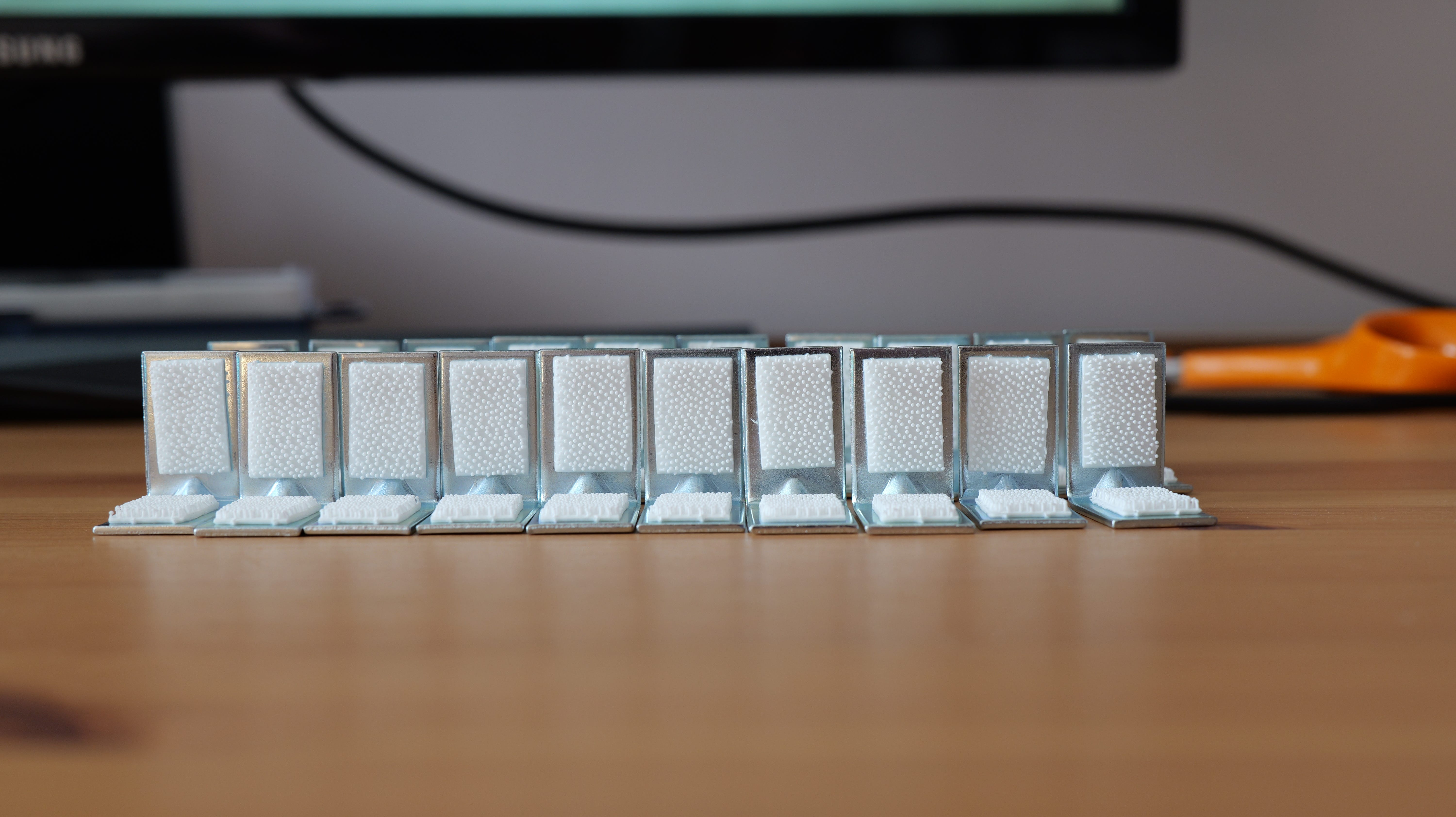
I made these little connect-y pieces out of metal brackets and Command strips (the velcro-y kind, not the sticky kind):
Then I cut some pieces of foam board, put more Command strips on the foam board pieces, then used the connect-y bits to put everything together.
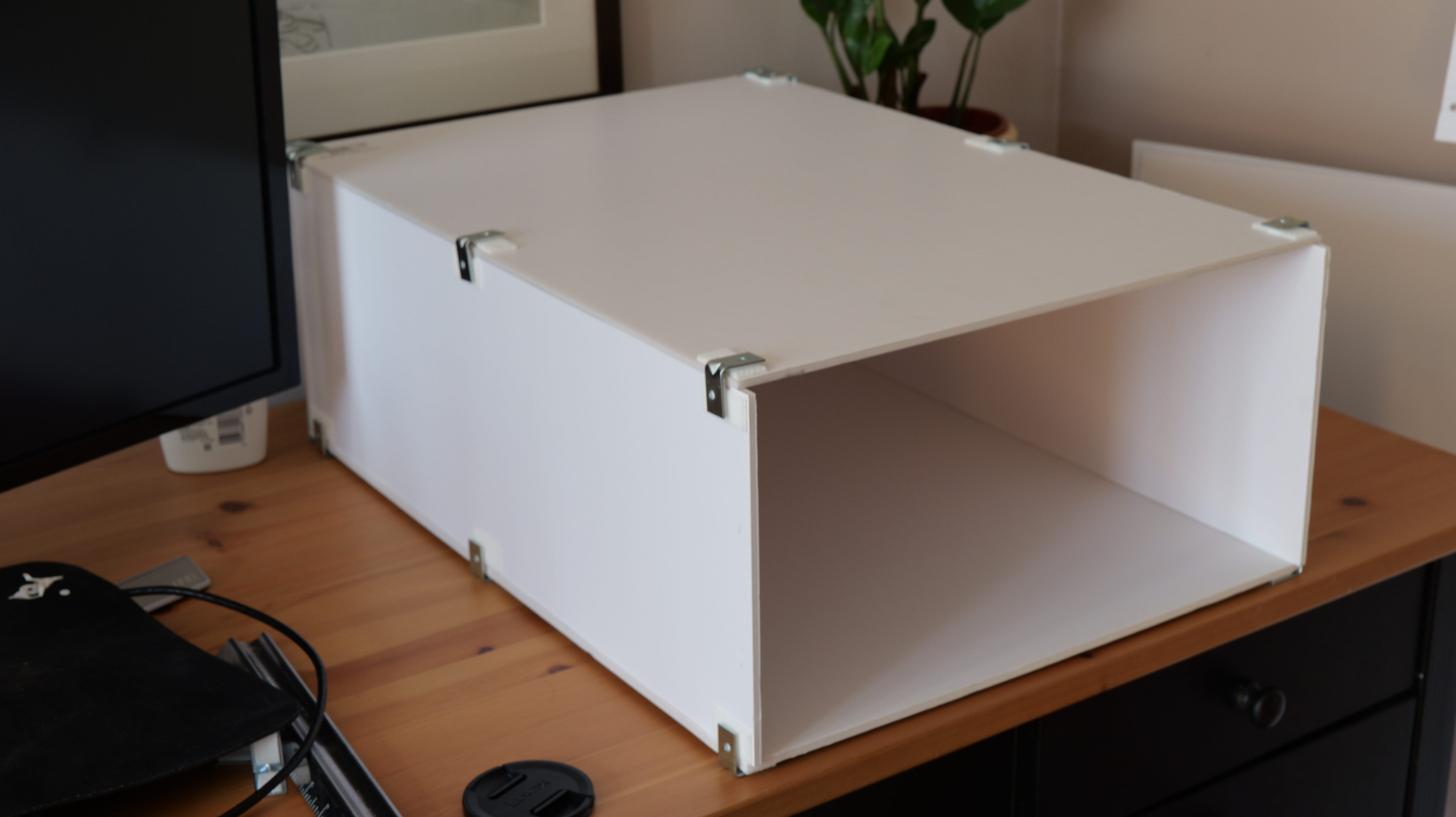
I’m starting as simply as possible. It’s just a box. An approximately 23” x 16” x 8” box. With just five sides, so I can look into it. By using these little velcro-y connector bits, I can deconstruct it and store it all flat together, and replace individual walls as I need to. Every piece should be both reusable and easy to store.
Depth
The first lesson came before I did any lighting at all. It came when I stuck my camera in and was surprised at how shallow the box looked:
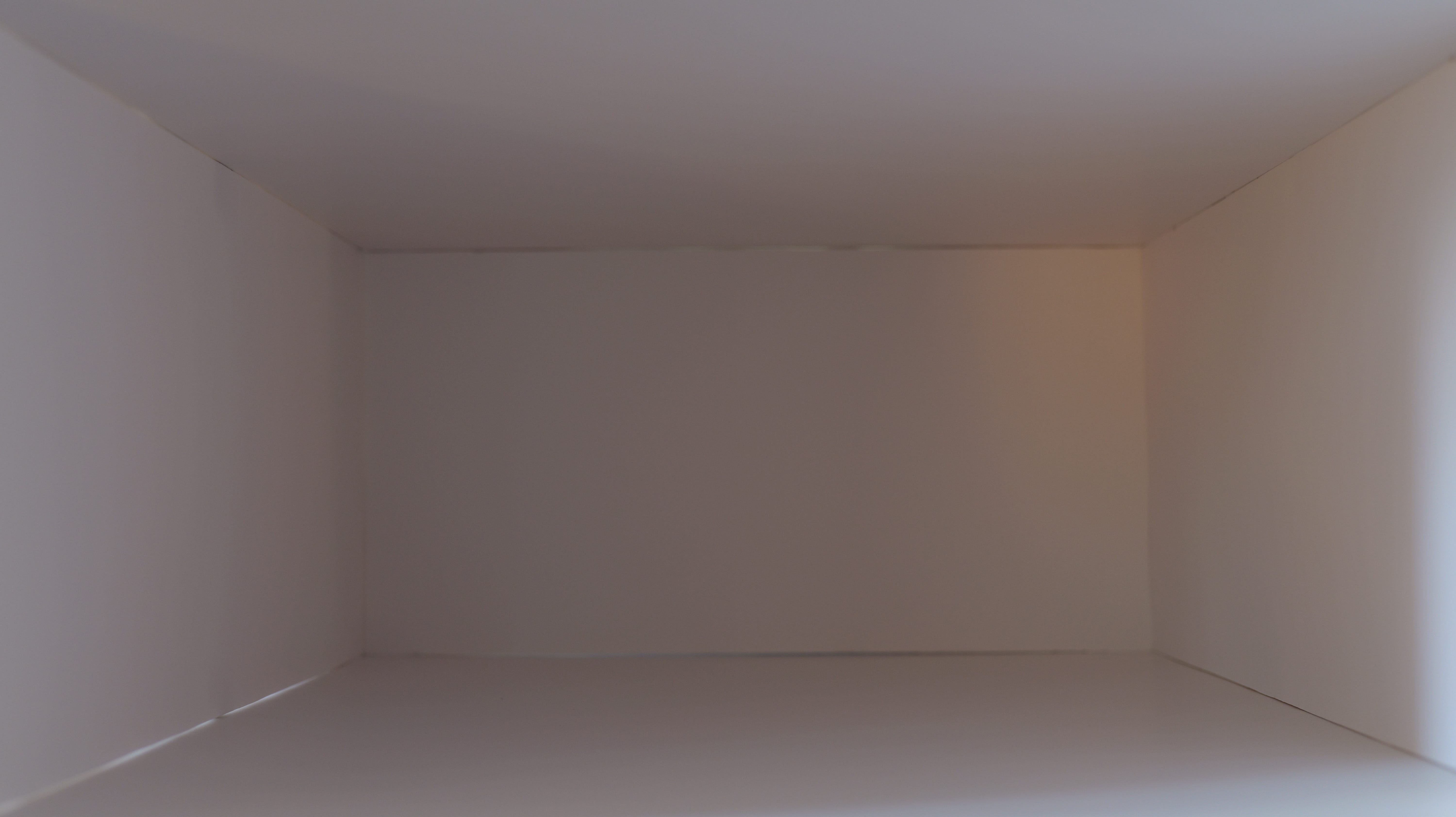
And that has to do with the focal length of the lens, I guess. 50mm, it seems, really flattens the view. Good to know.
For reference, I tried taking a picture with my (very old and bad) phone camera, and here’s what it looked like:
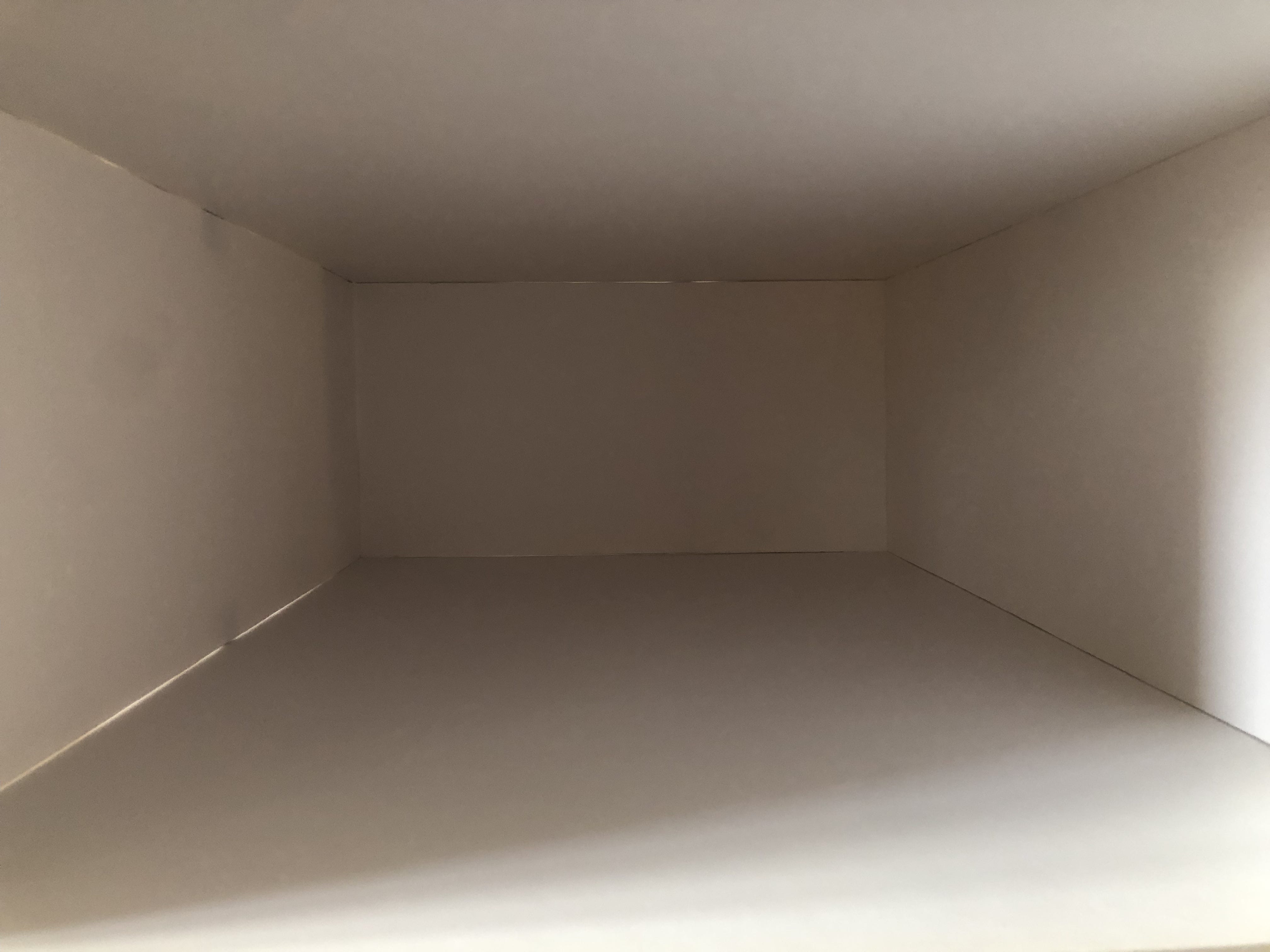
Look at that! That’s so much deeper! In both pictures, I bring the edge of the frame right to the outer edge of the box. But in the iPhone picture, the “room” looks very deep. Google tells me that an iPhone X’s camera’s focal length is 28mm.
I really want the ability to capture this sort of depth. So I’m now bidding on a 20mm-60mm zoom lens on eBay. I’m currently the highest bidder.
Light
I kind of have to wait until nighttime to take the pictures for this project, because I need to be able to control the lighting conditions of the room, and my curtains aren’t that good.
Here’s how we’re looking now. I added a long “window” for light to come into. I also tried to strategically add weight/fabric to the back, to keep light from coming through the seams where the walls meet one another:
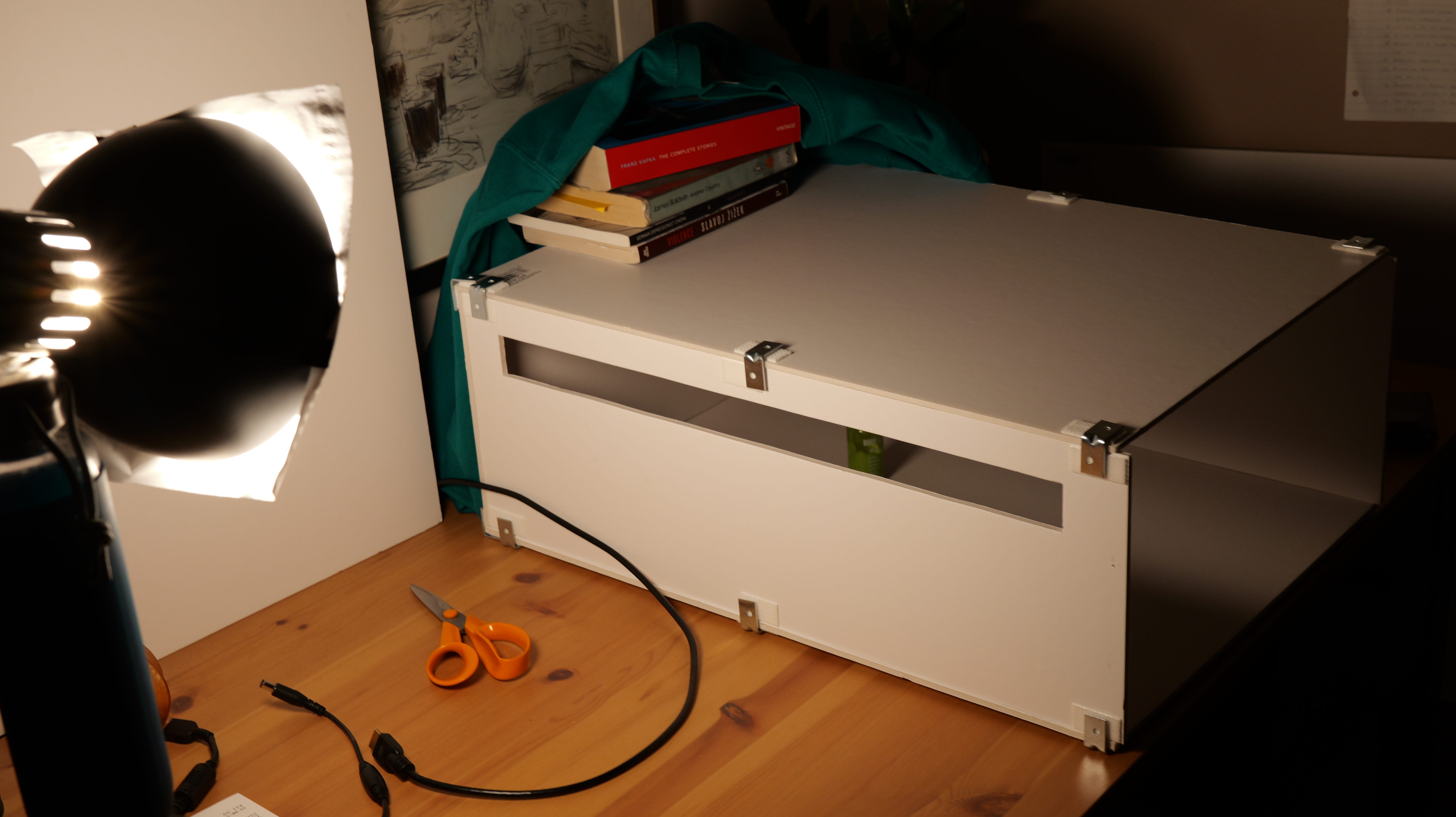
I stuck a bottle of lotion in there (I have very dry hands) to act as a sort of mannequin.
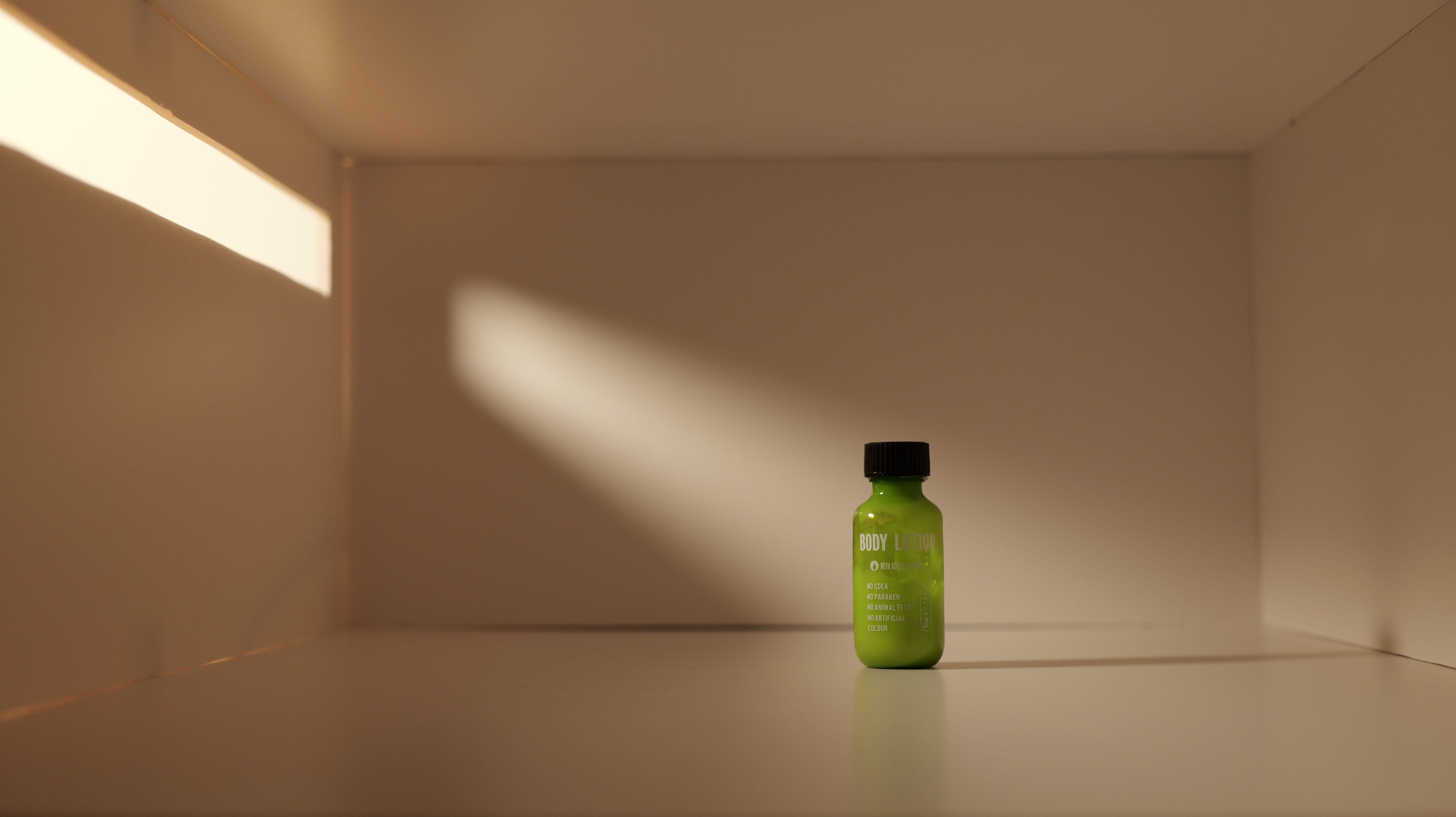
And with that... you know, we’re on our way. That kind of looks like a little green person in a weird sterile room, doesn’t it? Sort of?
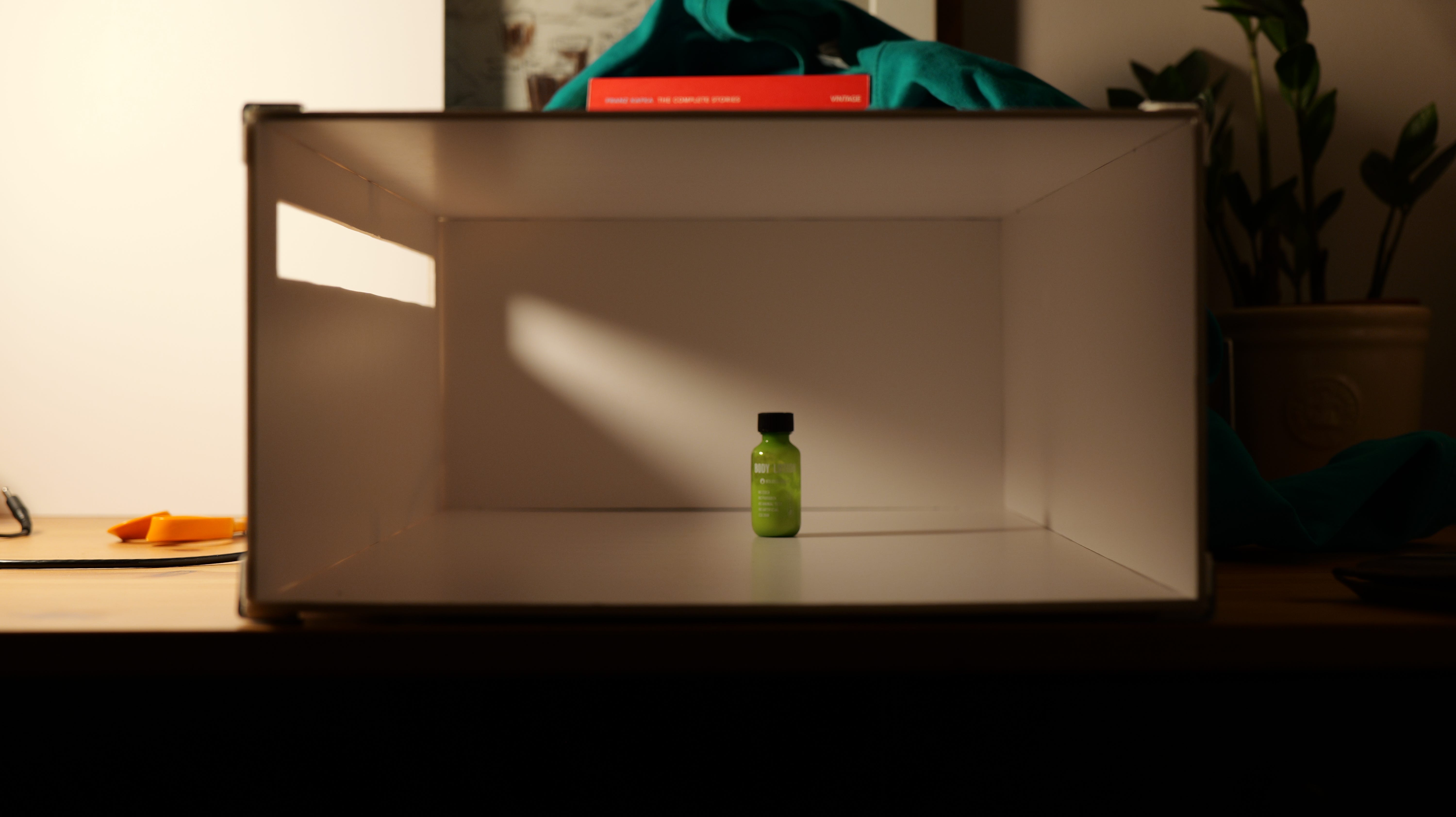
Already, with this photo, you get a hint of that “black void” thing that I find so appealing in the Night of the Hunter and Disco Elysium scenes.
For reference (again), here’s a photo I took with my phone:
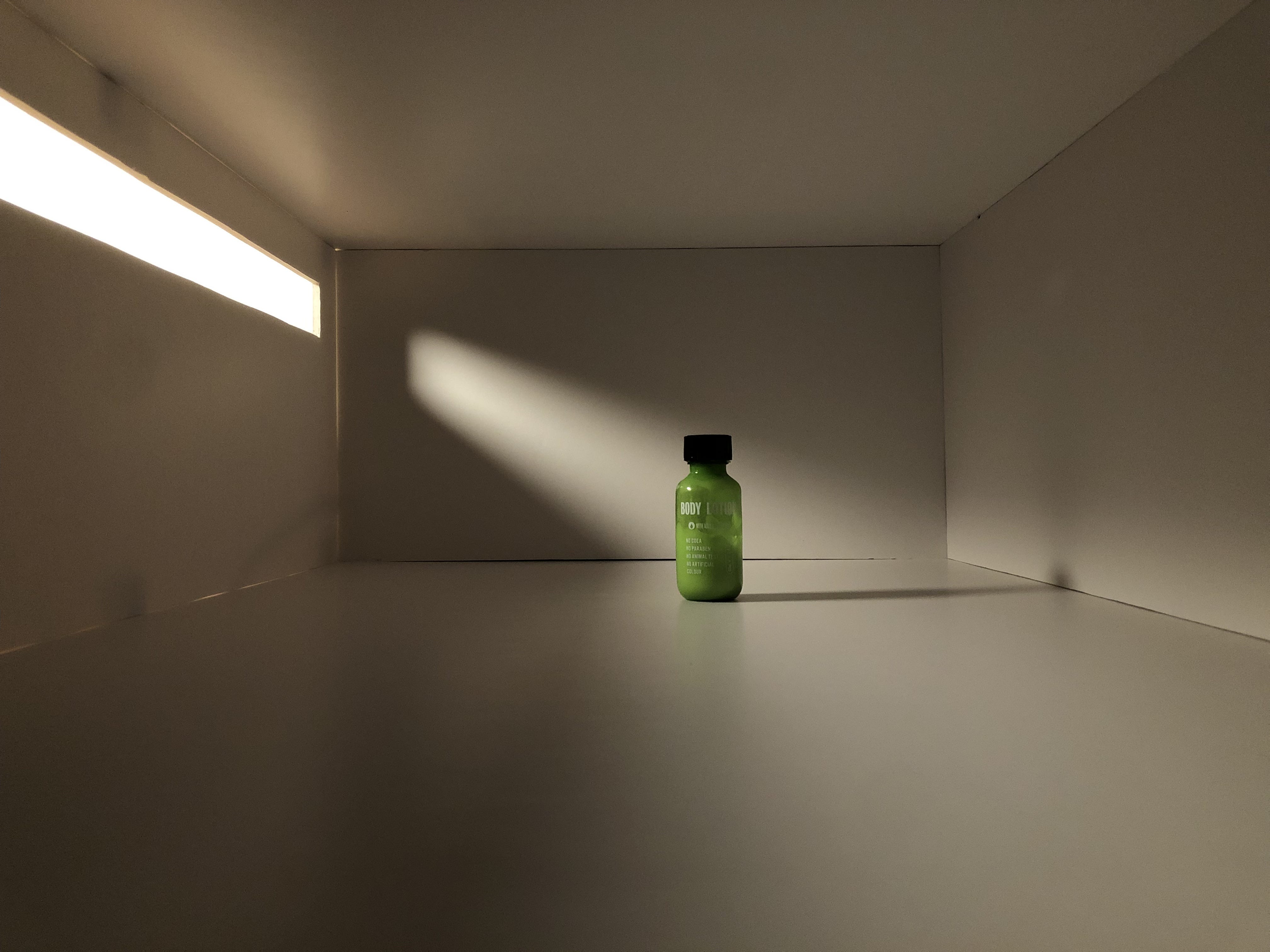
This photo is much higher contrast, which I kind of like, and I want to figure out how to recreate that with my camera. For what it’s worth, that contrast is way less “accurate” than the light in the Lumix photos, but realism certainly isn’t the point of this project.
***
Where does this project go?
I want to build more complicated architecture. I want to have more complicated lighting setups. I want to get little miniature figurines of different scales. I want to play with materials of different translucency/reflectivity. I want to experiment with Photoshop. I want to try to recreate that Night of the Hunter scene, in miniature.
Eventually, I’d like to add movement and sound. How much mood can I communicate in a little world on my desk?
You should get some cheap iPhone lens attachments for experimenting…and also maybe a better iPhone